 Weather today
Von der Leyen proposes €45bn loan to Ukraine backed by joint debt

The European Commission has proposed issuing an additional €45 billion support loan to Ukraine, backed by joint debt, as the war-weary country fights to keep its economy afloat amid Russia's relentless airstrikes.
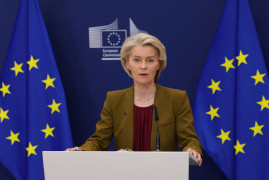
The loan, unveiled on Wednesday by President Ursula von der Leyen, envisages €20 billion for financial aid and €25 billion for weapons purchases such as drones, missiles and urgently needed air defence interceptors.
It will be disbursed gradually throughout 2027 and supplement the ongoing €90 billion loan, agreed by leaders in December last year.
"We are sending a clear message to Russia: We want peace," von der Leyen said.
"Five years since the start of this war of aggression, Europe stands united. We are as committed as ever to support Ukraine, in war and in peace."
Von der Leyen said she was "very confident" that all 27 member states, without exception, will back the proposal amid ongoing peace talks.
But four of them — Slovakia, the Czech Republic, Hungary and Bulgaria — have already made it clear they will not take part. Last year's fraught negotiations resulted in an opt-out for Bratislava, Prague and Budapest, which they now seek to continue.
German Chancellor Friedrich Merz has hit back, threatening to veto the next EU budget, including coveted cohesion funds, if fresh aid for Ukraine is not agreed by the 27 as a whole. Slovak Prime Minister Robert Fico has called this "blackmail".
Von der Leyen sided with Merz and stressed the loan was split into two pillars, civilian and military, to assuage concerns of those who oppose weapon deliveries.
Leaders will have their first debate on the proposal next week when they meet in Brussels. The budget will also be on the table, providing a politically explosive mix.
Central to the debate will be the question of borrowing costs.
Though the Commission still enjoys a triple rating as a debt issuer, going to the markets to raise €45 billion will not come off cheap.
Interest rates have soared this year amid high energy prices, geopolitical volatility, investor jitters and the costly AI race. This means the bloc will have to foot billions in annual interest to keep the support going. Still, the prevailing opinion is that the costs of a failed Ukrainian state would exceed any financial undertaking.
As in previous operations, the repayment of the principal will be made contingent on Kyiv receiving war reparations. If Moscow, as expected, refuses to provide the compensation, Brussels reserves the right to use Russia's immobilised assets, worth €210 billion.
Kyiv is not expected to pay back out of pocket in any case.
"The option explicitly to use immobilised Russian cash balances to repay the support loan" is envisioned in the proposal, von der Leyen said.








 Studio One